Pride and Queer Joy
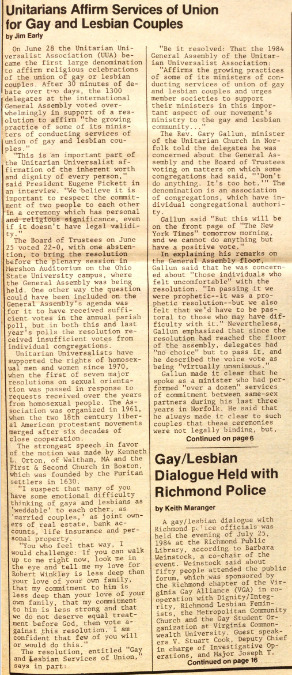
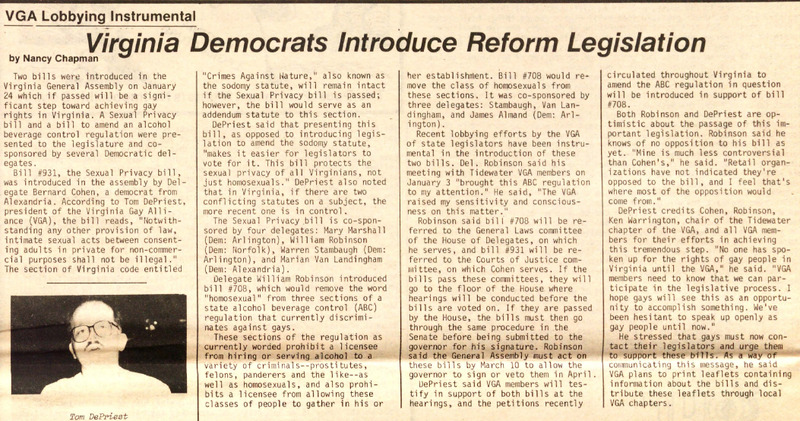
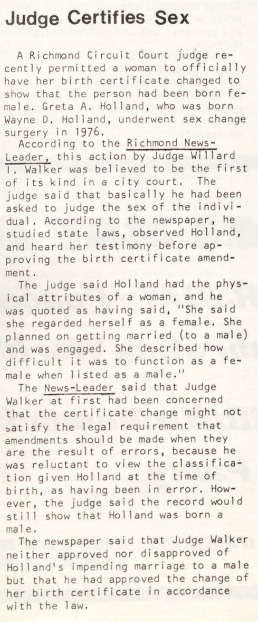
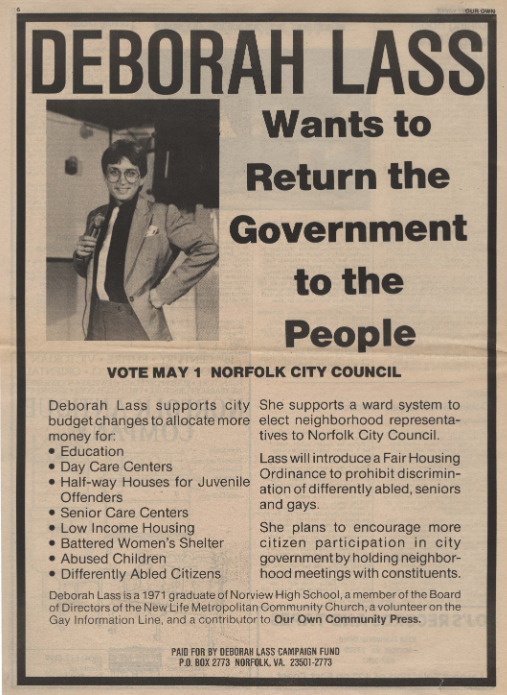
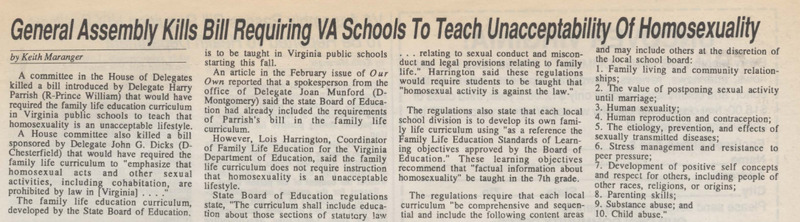
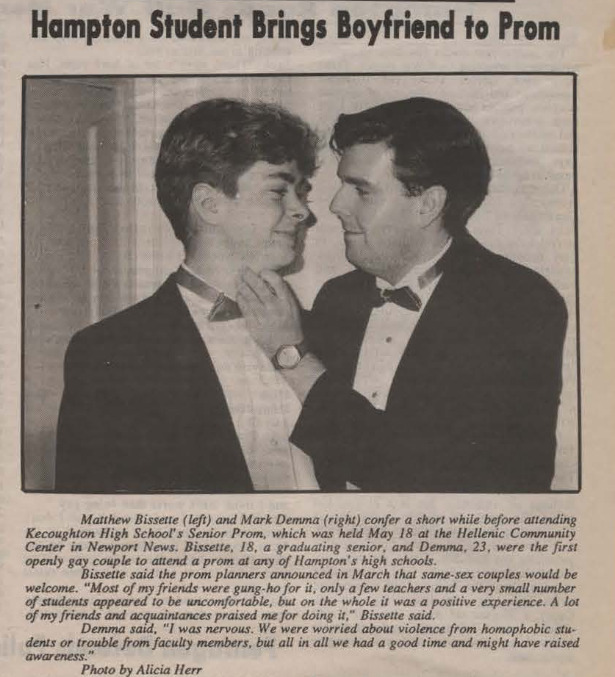
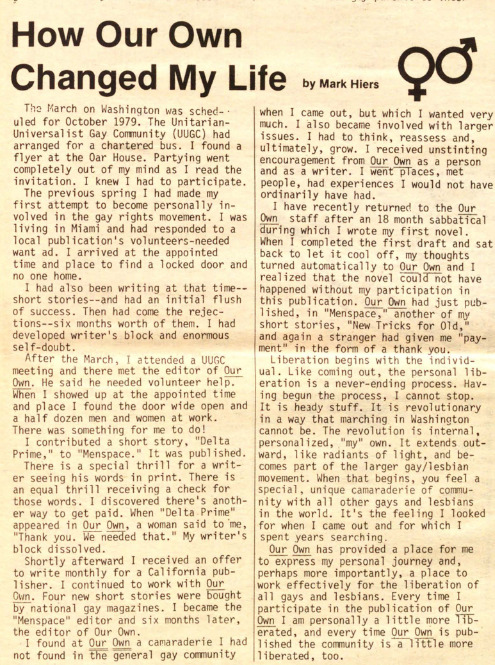
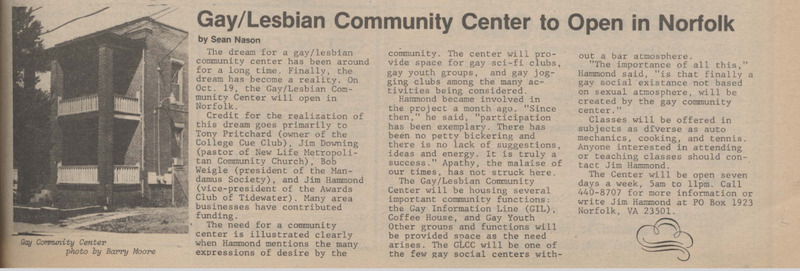
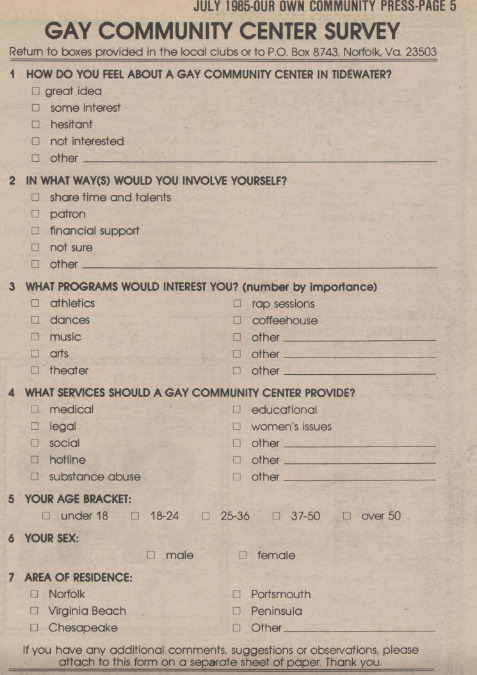
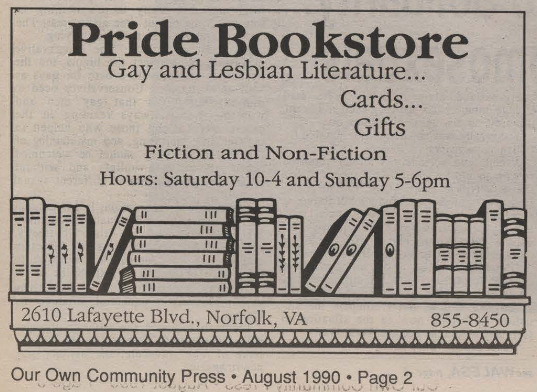
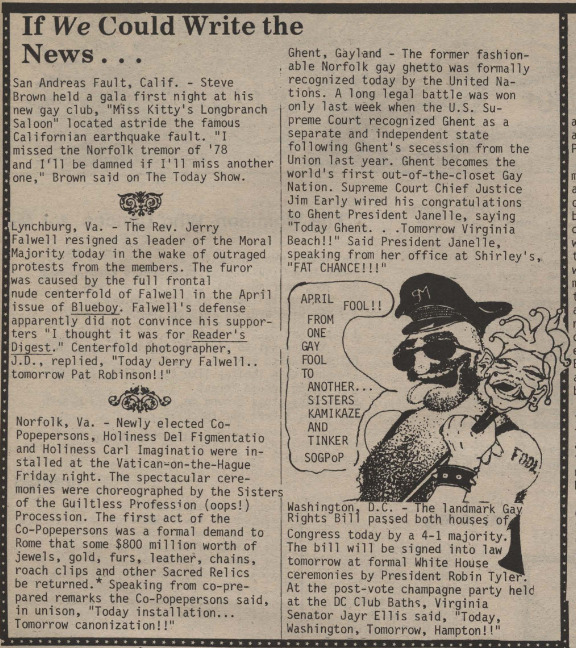
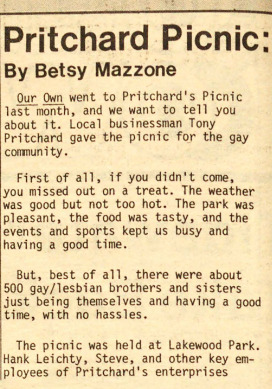
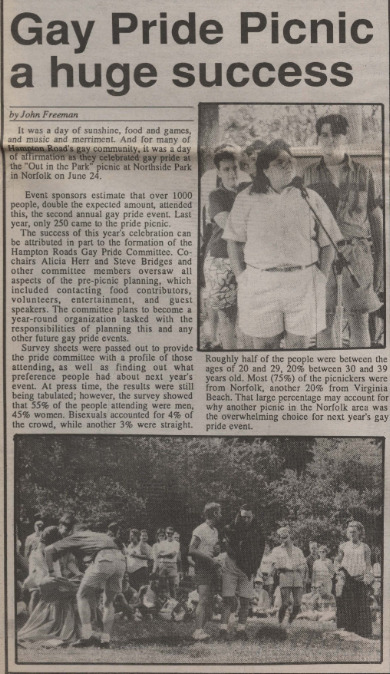
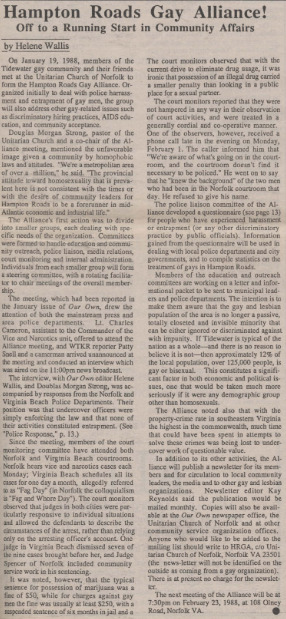
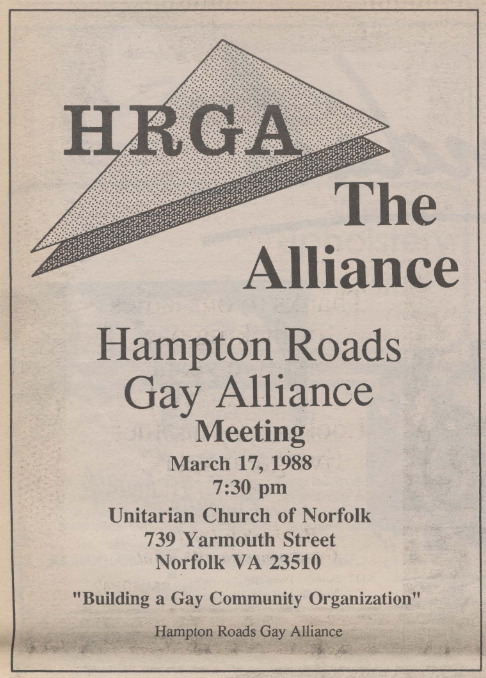
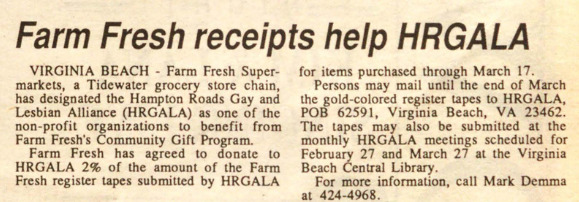
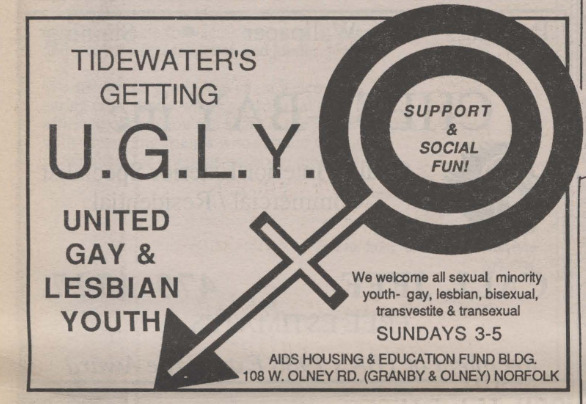
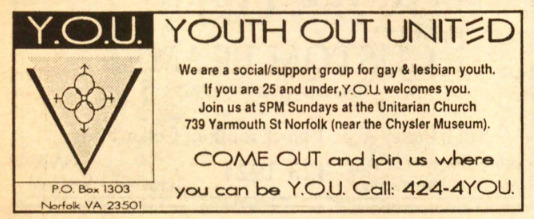
One important thing to celebrate and remember is moments of queer joy that took place in Hampton Roads. Some of these examples include the Unitarian Universalists being one of the first religions in the US to provide services of holy union for same-sex couples, despite those marriages having no legal recognition. Additionally, the Virginia Democrats introduced reform legislation proposing a sexual privacy law to allow for any sexual acts within the privacy of an individual's home to be legally protected, essentially ending the state's existing sodomy law. Additionally, this bill was set to lift the alcohol laws that prohibited businesses from selling alcohol to known homosexuals. Another exciting thing was that a judge in Virginia decided to allow a transgender woman who had bottom surgery, breast augmentation, and had been on estrogen to have her birth certificate, Social Security card, and any additional forms of ID such as a passport list her sex as female despite being born male, as well as putting the name she chose for herself on her ID. This helped to set a precedent for trans individuals today legally changing their IDs. Another exciting thing was that an openly lesbian woman named Deborah Lass in the 1980s ran for city council in Norfolk. While she didn't win, she was the first openly gay or lesbian individual in Hampton Roads to run for public office. Another small win was that the Virginia General Assembly killed a bill that was designed to require public schools to teach that homosexuality is unacceptable behavior, preventing it from becoming law in Virginia, which would have caused irreparable harm to queer kids in Virginia schools. While looking at schools, another thing worth celebrating was that, in the early 1990s, a high school senior from a Hampton high school was able to bring his boyfriend to prom and was not harassed by his peers at prom. The local queer newspaper Our Own allowed many community members to find other members of their community and were able to find partners, friends, and a sense of community through that newspaper and events advertised through that newspaper. Additionally, they created a gay/lesbian community center near Old Dominion University, which was designed to create a space for events outside of gay bars as well as providing resources to the community. This was essentially during the AIDS epidemic due to the stigma that existed. As they were creating it, they took feedback from the community on what they wanted this space to provide. Another exciting thing was a local bookstore called the Pride Bookstore that sold LGBTQ+ books that was in Norfolk in 1990. One thing they did one year on April Fools' Day was write a hypothetical news article about what the world would be like if they had their way. They wrote about a reverend resigning for doing full frontal nudity, advertising for gay bars on The Today Show, a gay pope of Norfolk, the neighborhood of Ghent becoming its own country and it becoming the city of Ghent in the country of Gayland, and the White House passing 4 pro gay rights laws at once and referencing local community members as the supposed President of the country and state Senator of Virginia. While it was very fantasy-based, it was absolutely based on the hopes and dreams of the community. Another thing many community members got the chance to experience were pride picnics, which eventually developed into what today we know as the Hampton Roads Pride Festival in downtown Norfolk. The first one was hosted by a local bar owner, Tony Pritchard, who called it the Pritchard Picnic in 1982. It took place at Lakewood Park and approximately 500 people attended. Then in 1990 it was hosted by the newly formed Hampton Roads Pride where they nearly doubled their attendance with 1,000 attendees. Hampton Roads Pride originally existed as the Hampton Roads Gay Alliance, then the Hampton Roads Gay and Lesbian Alliance. They formed in 1988 initially to focus on AIDS, police harassment, and community acceptance. They even partnered with local grocery chain Farm Fresh, where individuals could turn in their receipts, and 2% of the total on the receipt went to support the Hampton Roads Gay and Lesbian Alliance. There were also youth groups that supported LGBTQ+ teenagers. One group, United Gay and Lesbian Youth, met regularly. They did have an unfortunate name, as they went by the acronym U.G.L.Y. It provided a space for these teens to be themselves and feel supported among their queer peers. A later group formed called Youth Out United, or Y.O.U., which had a better acronym.