The Military and the LGBTQ+ Community
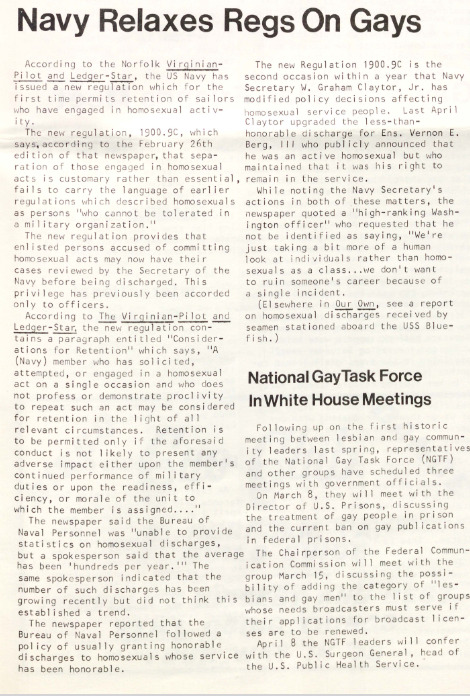
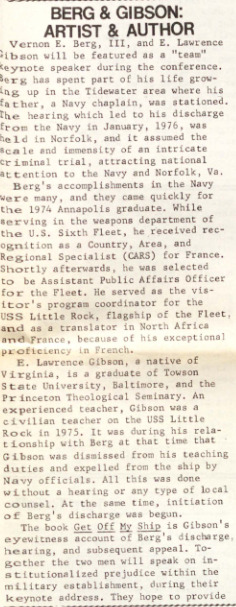
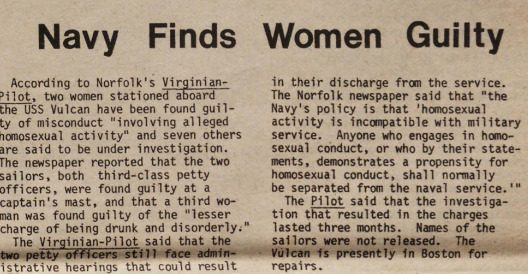
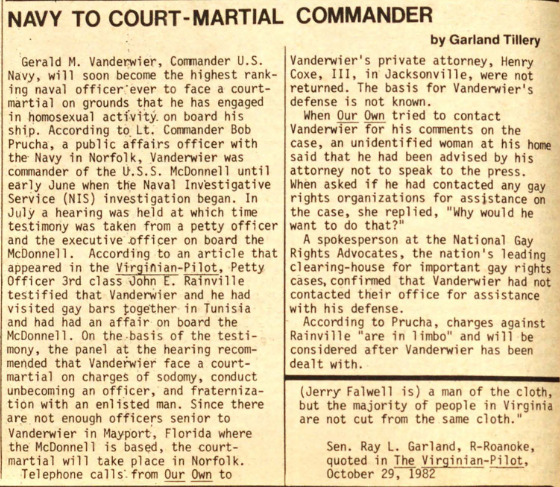
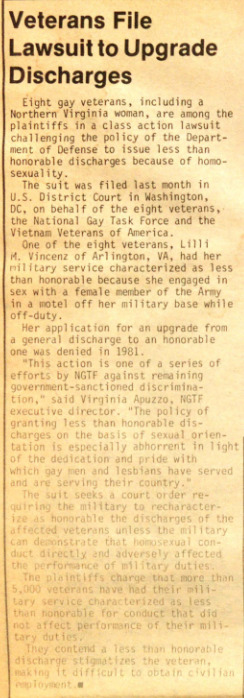
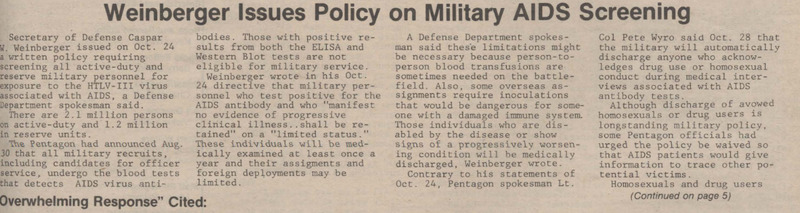
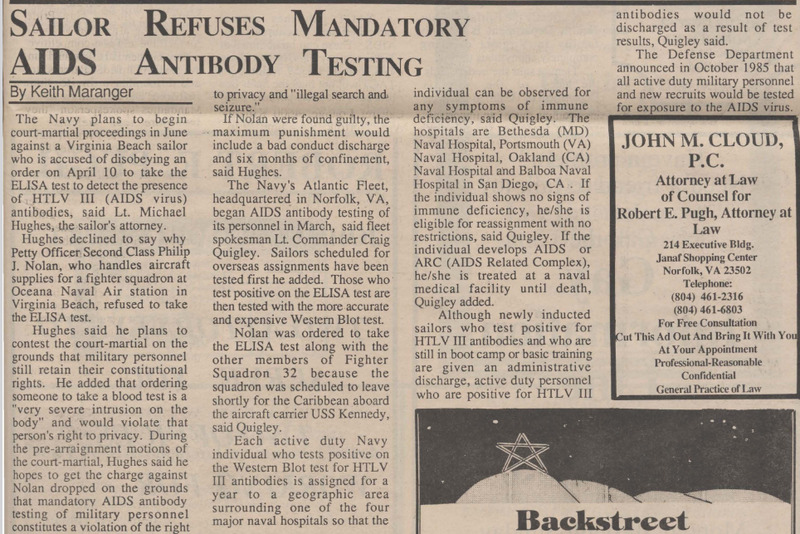
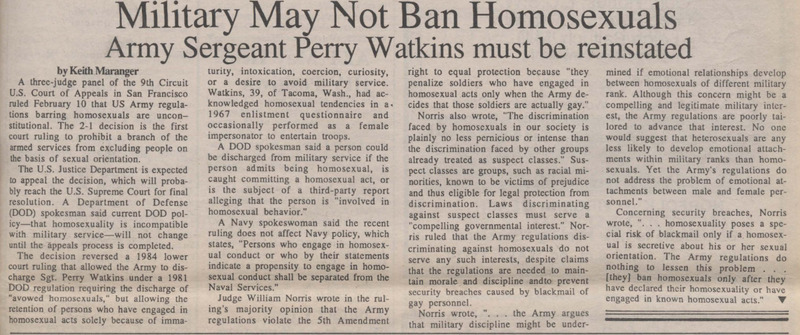
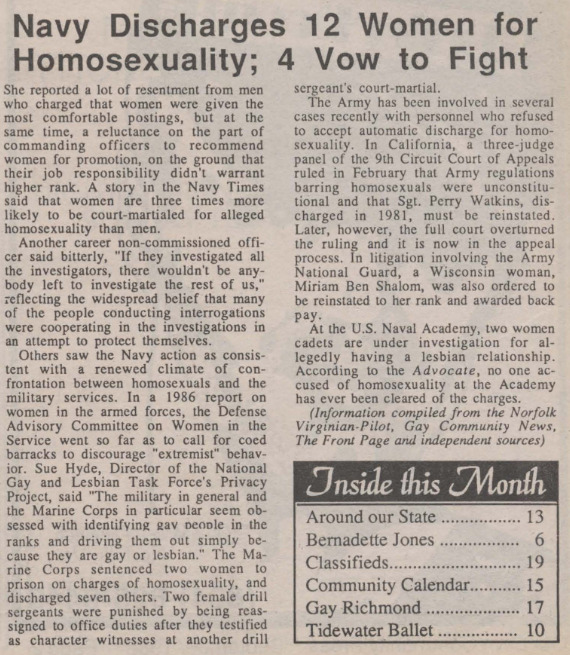
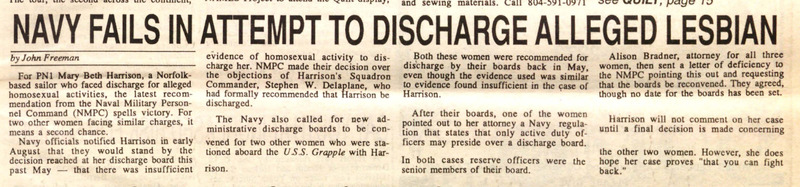
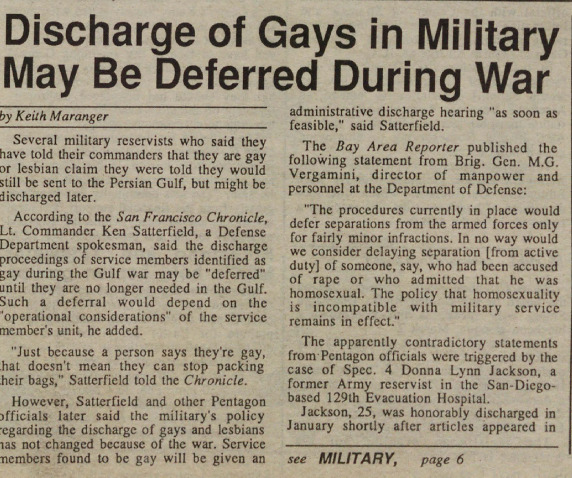
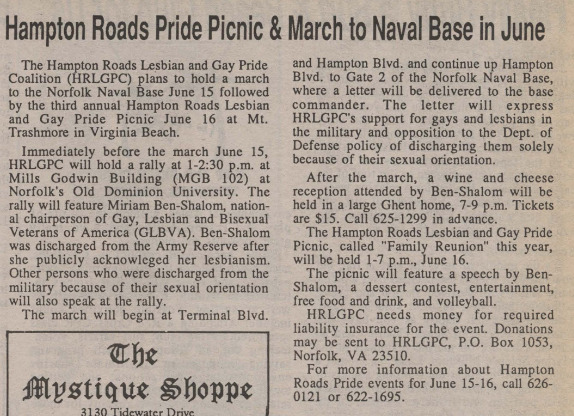
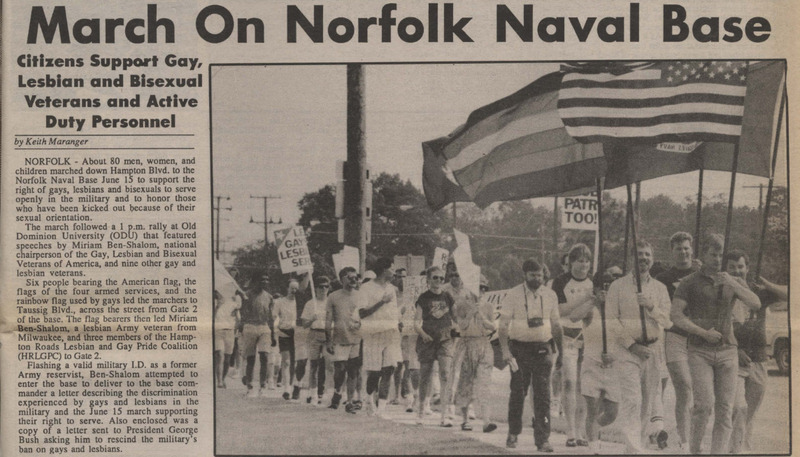
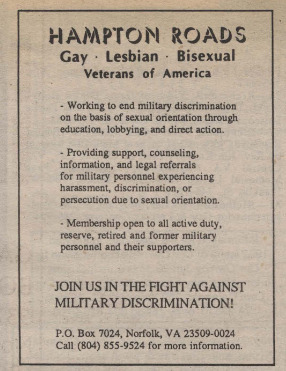
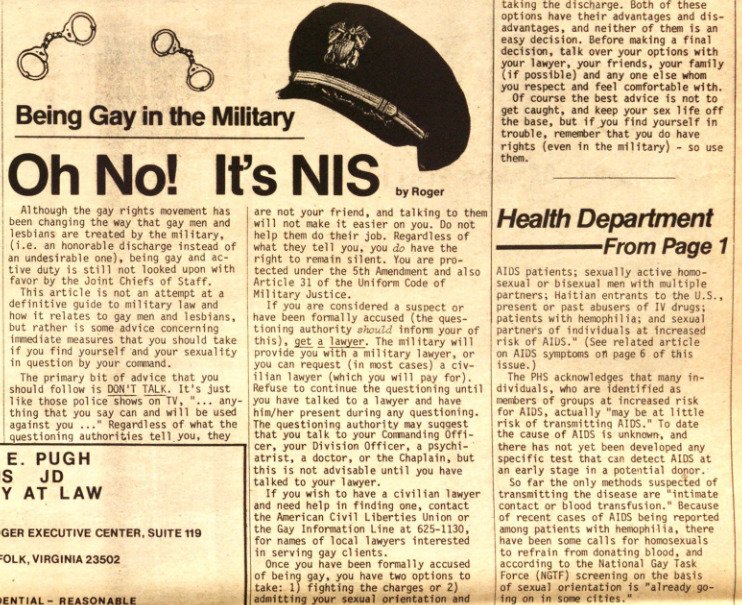
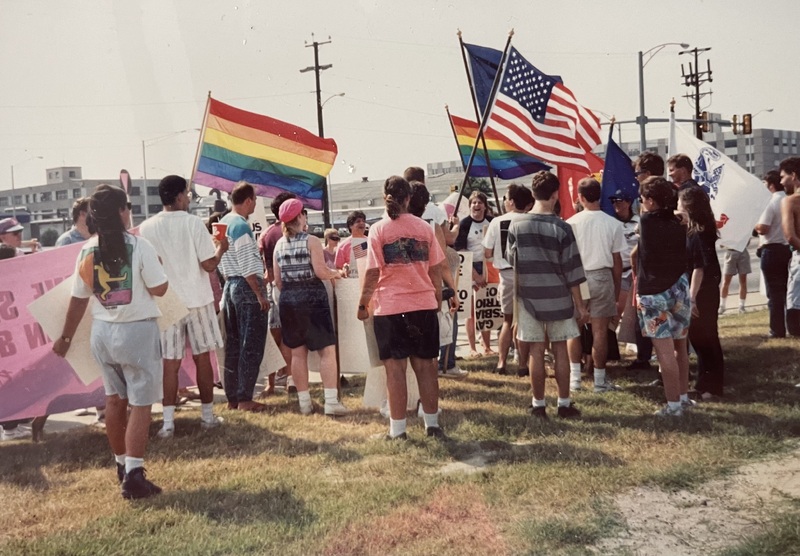
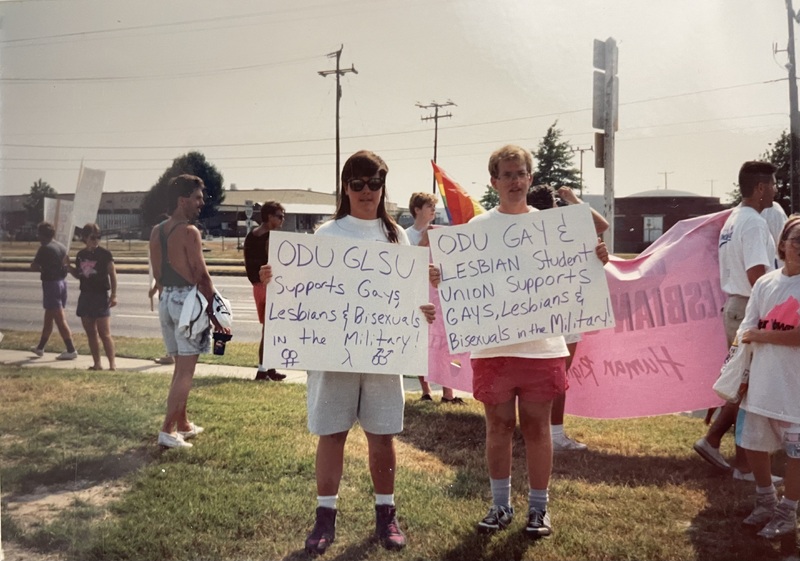
Norfolk has a strong connection to the Navy, due to being the home of the world's largest Naval base. Until 1994, if you were discovered as a homosexual while serving in the military, you would be discharged from the military. This traditionally involved being court-martialed and having a military court hearing to determine if there was enough evidence to remove someone. During the war in the Persian Gulf, there was such a demand for soldiers that the military decided to not remove soldiers identified as gay until their deployment in the Persian Gulf was finished. One of the many court battles with the military included one from a group of veterans dishonorably discharged for being homosexual who won the right for homosexuals to receive honorable discharges so long as that was the only reason for their discharge. During the rise of the AIDS epidemic in the 1980s, the military issued a policy requiring all active-duty soldiers, reserves, and recruits to take an AIDS antibody screening. Having a positive result did not mean a discharge for homosexual behavior; however, it did prevent many soldiers from receiving overseas deployments and being heavily monitored for symptoms. Many LGBTQ+ people opposed the ban on homosexuals in the military. In Norfolk, there was a March on Naval Base Norfolk, the one off Hampton Blvd, to protest the discharge of homosexuals from the military. In 1993, President Clinton introduced the "Don't Ask, Don't Tell" policy, which, for the first time, allowed homosexuals to serve in the military as long as they didn't disclose their sexual identities. Additionally, it prohibited soldiers from asking about a soldier's sexual orientation. This policy stayed until 2011, under the Obama administration where for the first time, homosexuals could serve openly in the military. Transgender people were first allowed to serve in the military in 2016, thanks to a policy under the Obama administration, which also required the military to provide their hormones while they were serving. However, in 2018, President Trump repealed that decision, changing the policy on transgender soldiers. However, that was rescinded in 2021 by President Biden when he first took office, allowing transgender individuals to serve openly again. When President Trump took office in 2025, he reinstated the ban on transgender individuals in the military.