The AIDS Epidemic
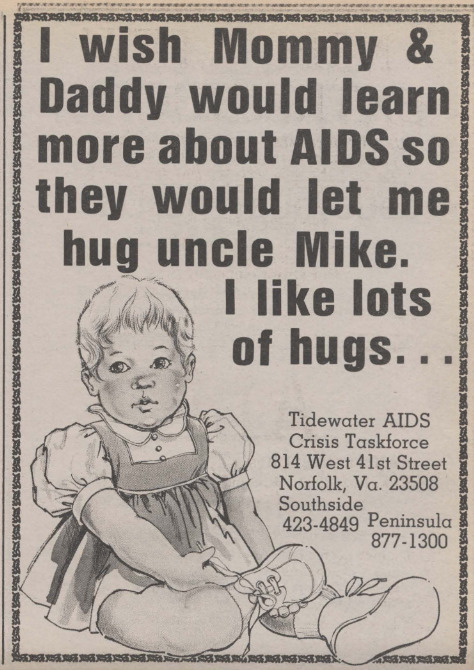
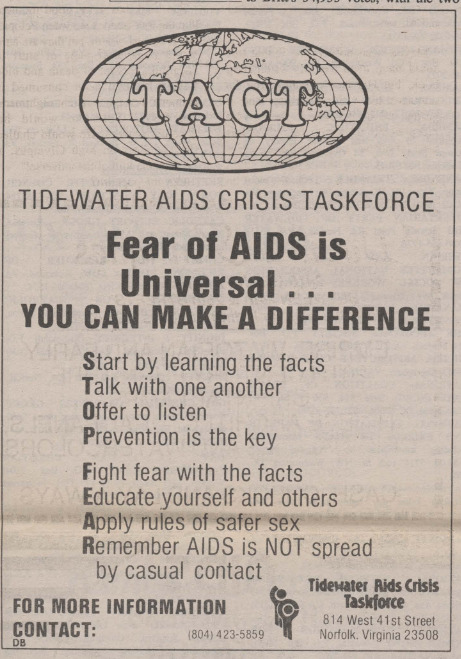
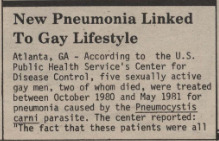
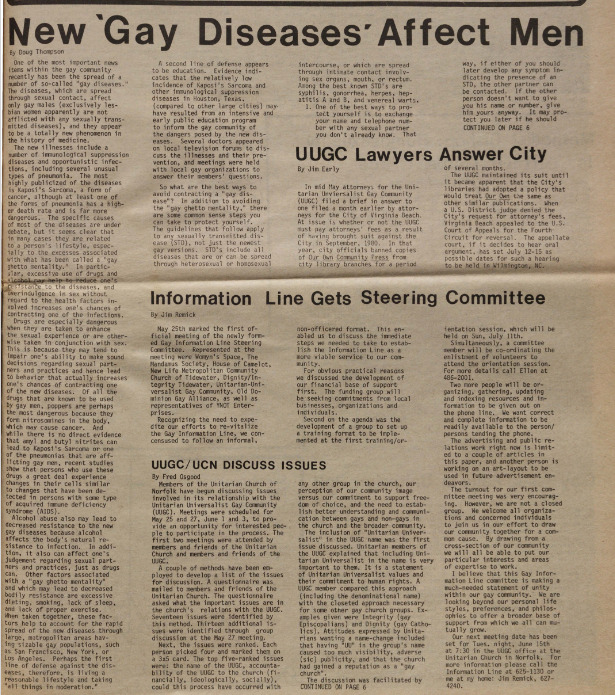
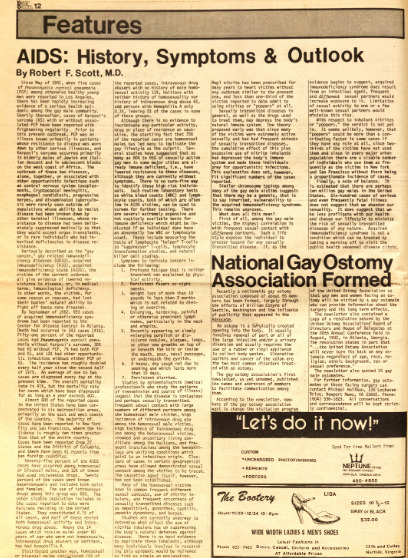
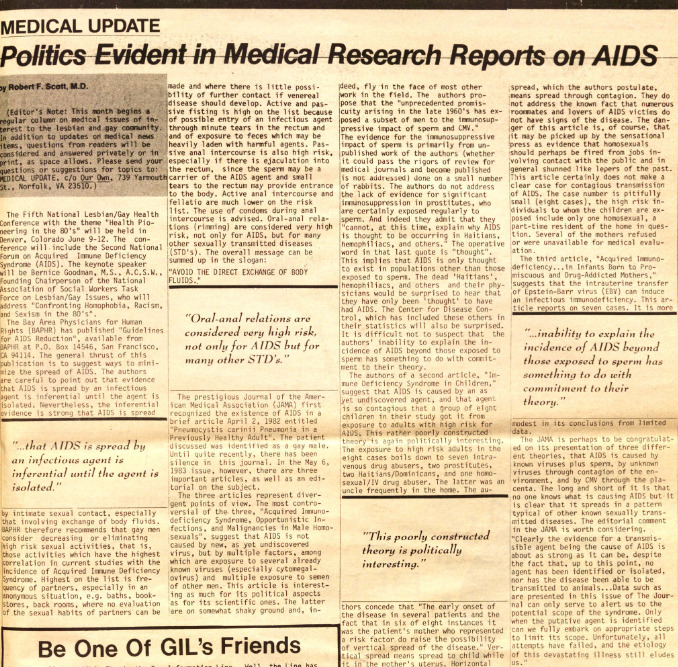
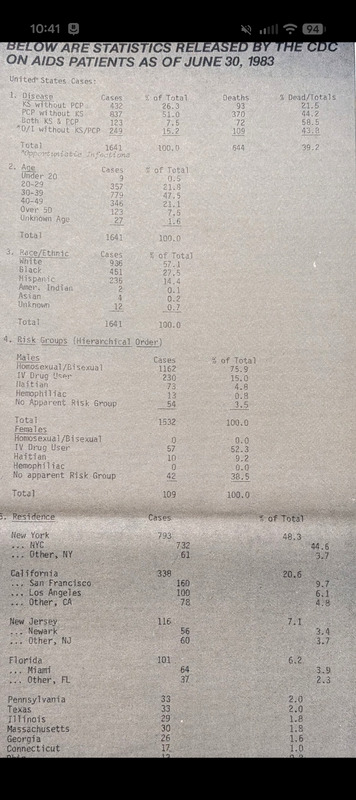
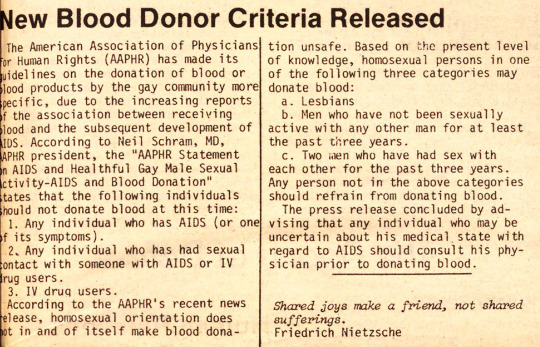
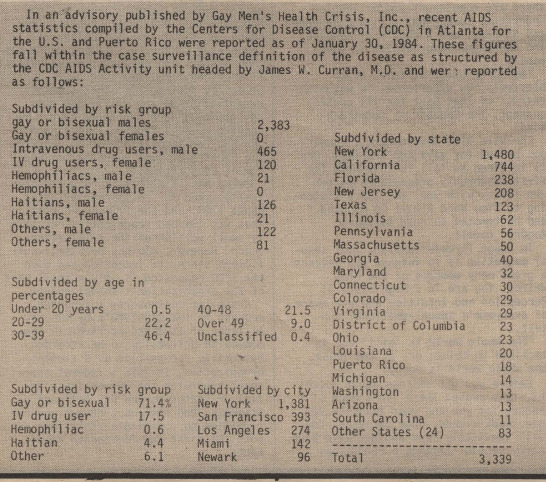
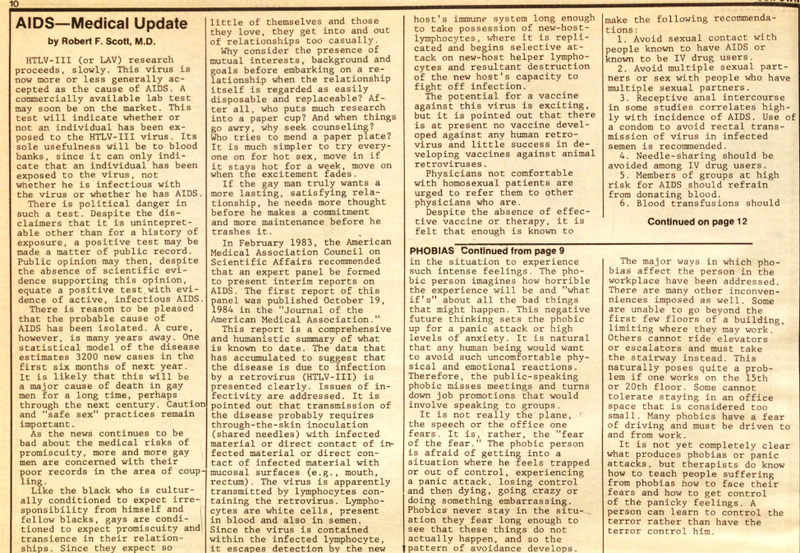
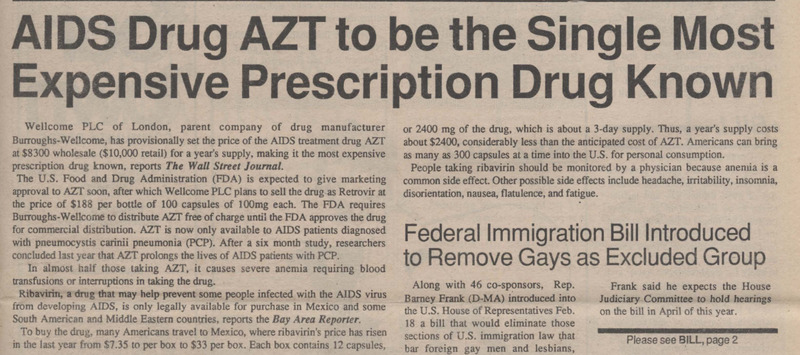
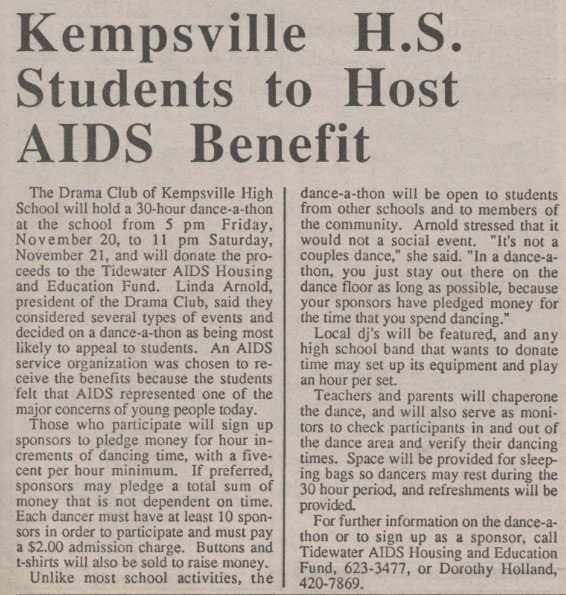
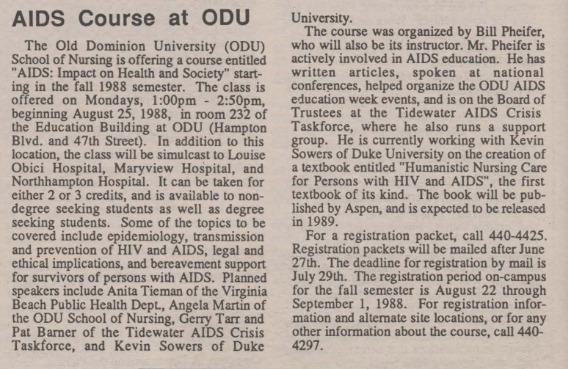
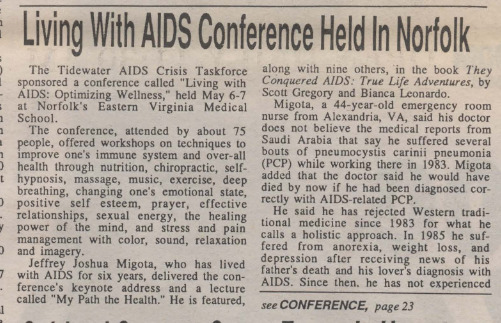
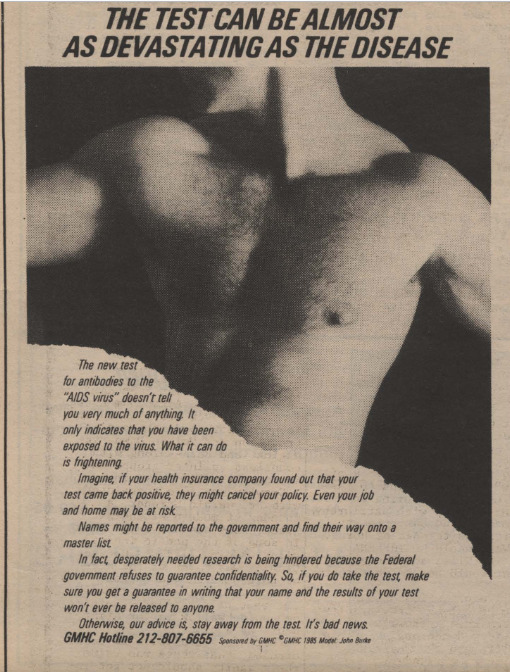
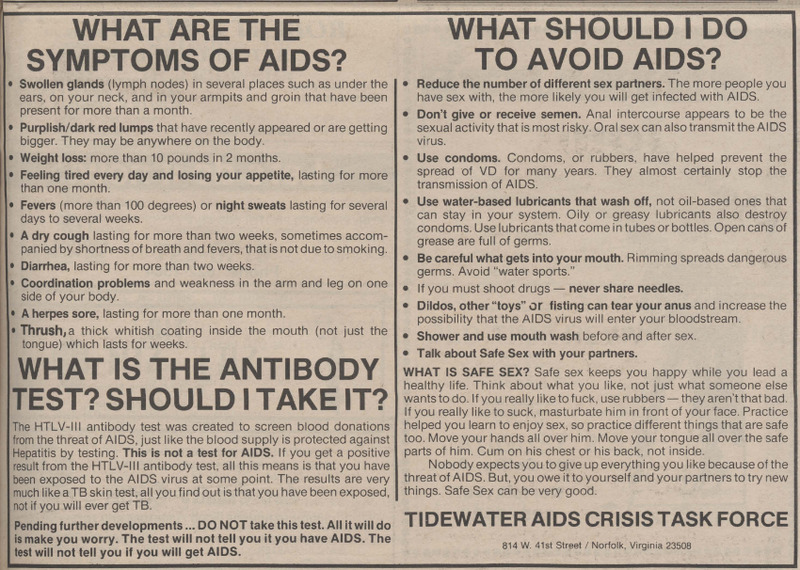
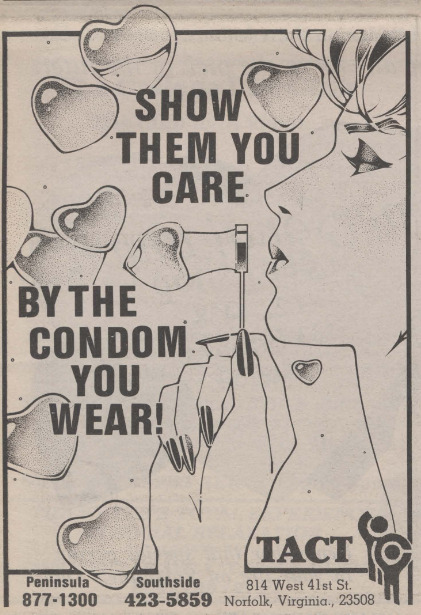
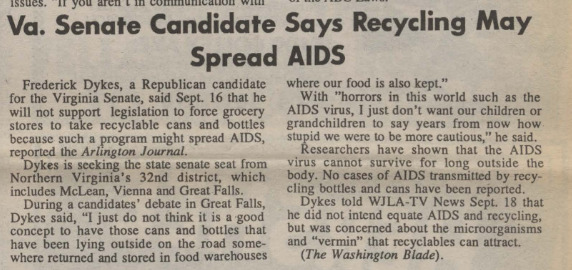
When AIDs was first discovered, it was thought to be some form of pneumonia that was only affecting gay men. There were theories based on religious claims that homosexuality was a sin and that this was a sign from God reaffirming their belief. As it was better studied, they began to understand that HIV was the Human Immunodeficiency Virus, while AIDS was the Acquired Immunodeficiency Syndrome. This is also when the Red Cross updated its policy to prohibit gay men from donating blood if they had had sex with another man within the last 3 years, despite having the ability to test the blood retroactively. The first drug released to prevent HIV from becoming AIDS was known as AZT; it cost $10,000 a year, which in today's economy would be $30,000. ODU's nursing program introduced a course on caring for AIDS patients. Additionally, some people felt that people should avoid getting tested for AIDS antibodies before they were symptomatic it was more emotionally distressing than not knowing. Additionally, ads were beginning to convince people to use condoms to prevent the spread of HIV. Kempsville High School hosted a dance-a-thon fundraiser to raise money for AIDS research and support services. Interestingly, a Republican candidate for the Virginia Senate suggested that recycling centers for cans at grocery stores would cause the spread of AIDS because of people with HIV and AIDS. This had no scientific backing.
Health and Education
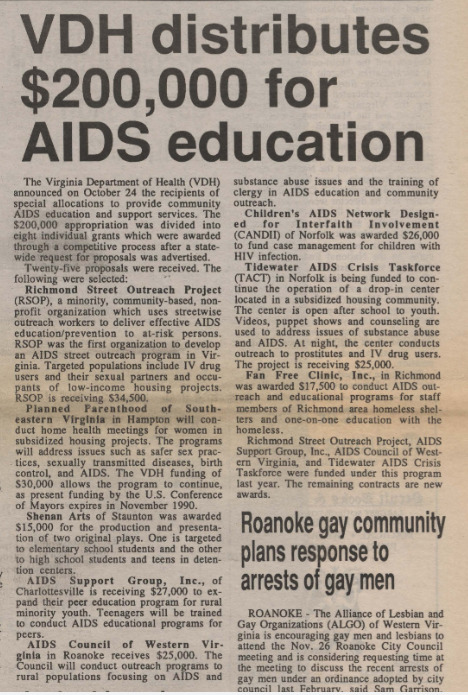
Non-profit work
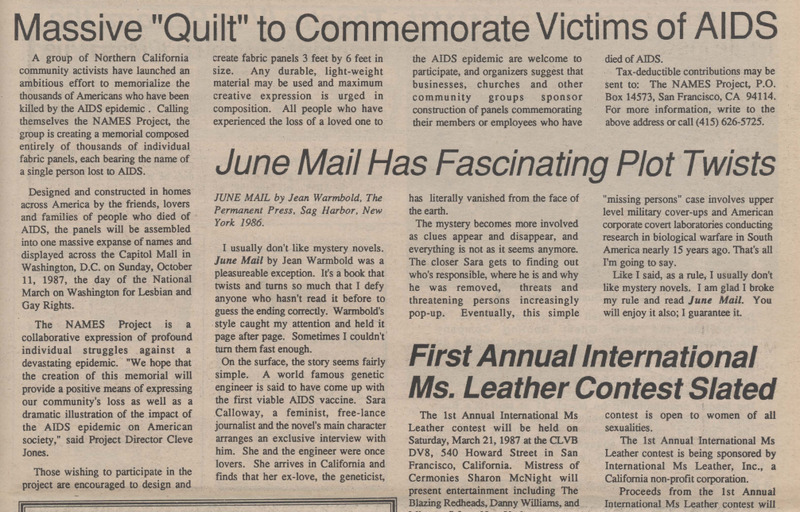
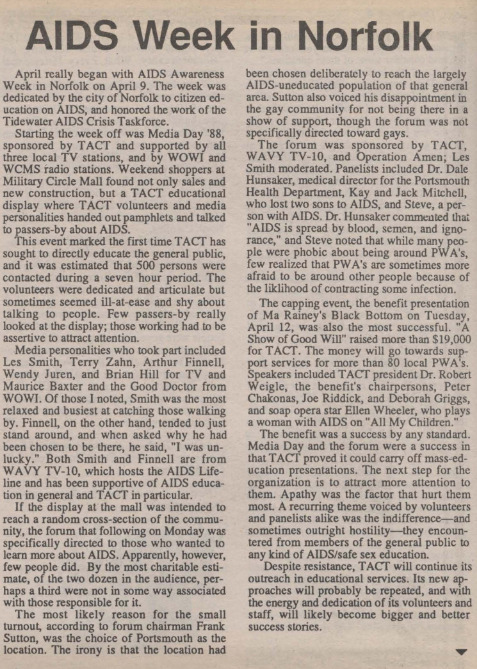
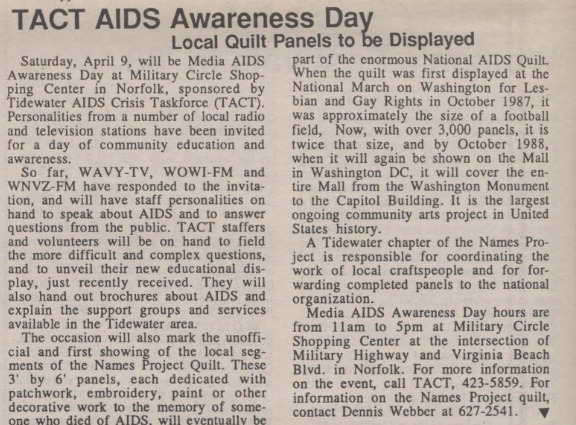
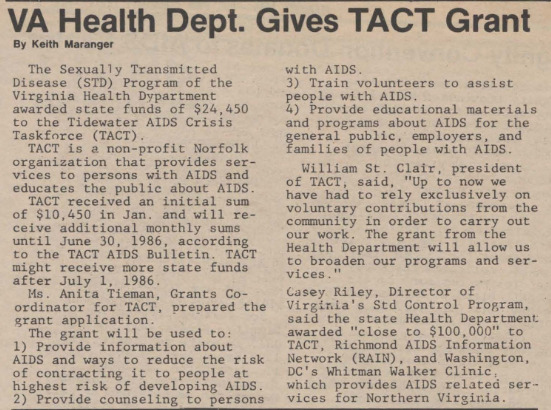
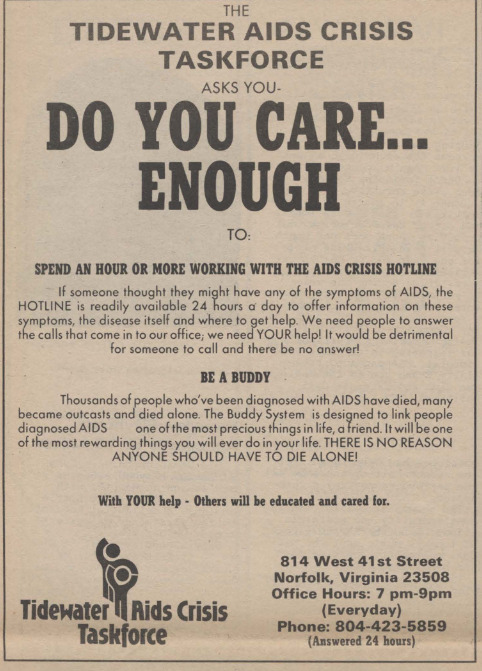
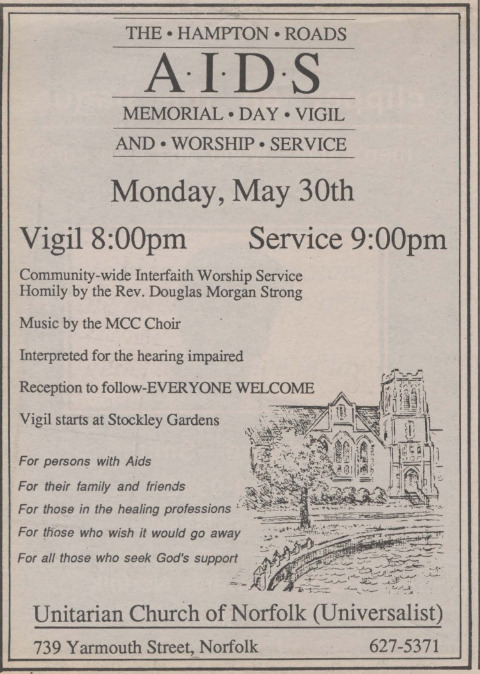
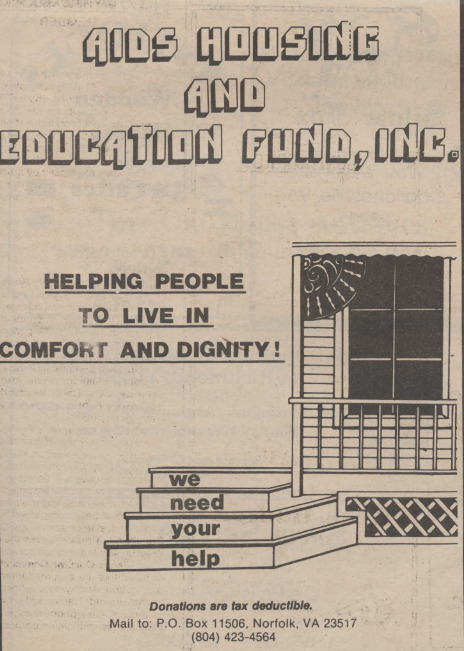
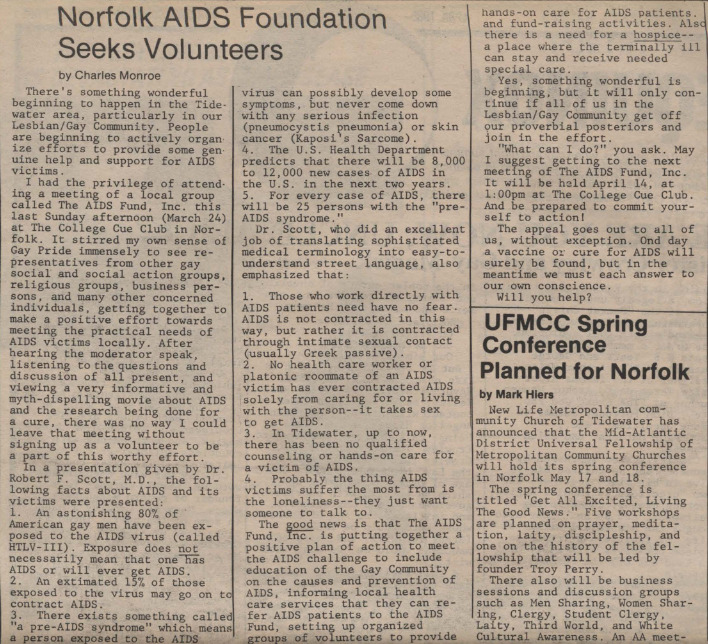
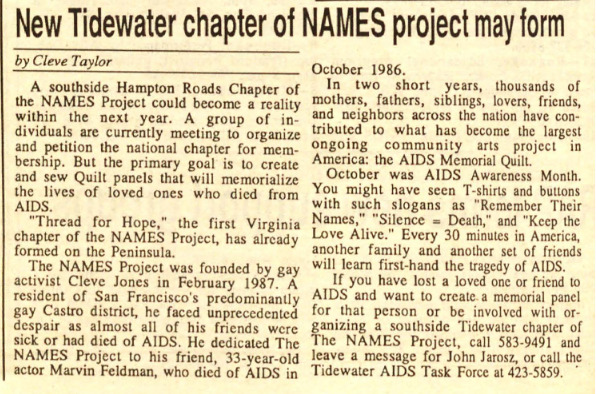
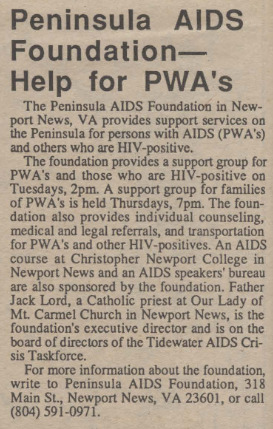
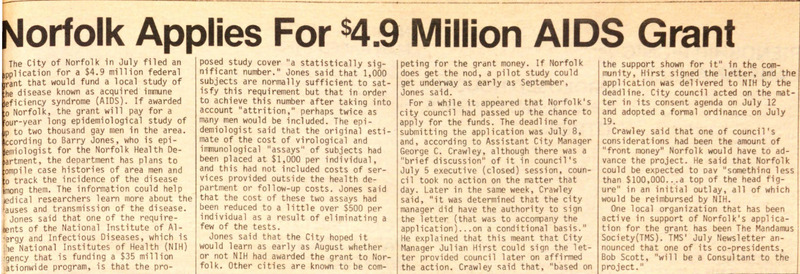
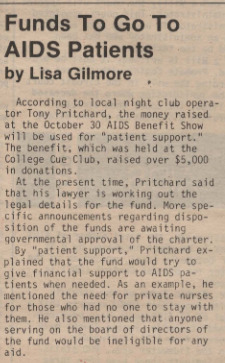
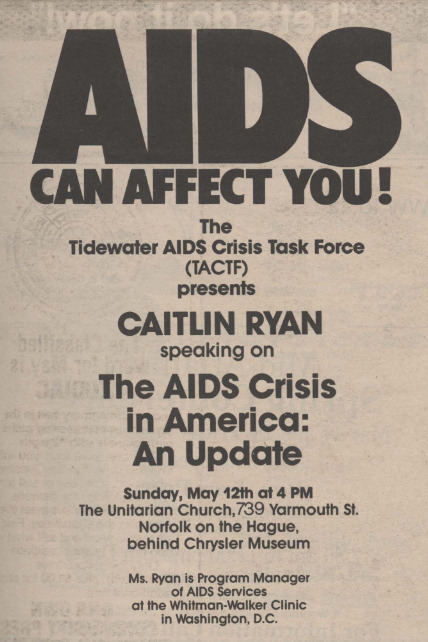
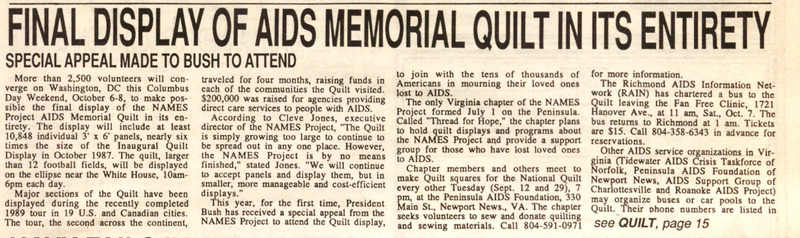
Locally there were four AIDS focused non-profit the Tidewater AIDS Crisis Taskforce, Peninsula Aids Foundation, AIDS Hosuing and Education Fund Inc., and Access AIDS. Access AIDs is the only one still in operation today, operating under the name LGBT Lifecenter. These non-profits worked together at times, but also worked independently. One thing they worked together on was The Hampton Roads AIDS Memorial Day Vigil and Worship Service where they honored the lives lost to AIDS. They were constantly seeking grants to fund support services as well as volunteers to help care for those with AIDS who had no family willing to help them out as they slowly died. The Peninsula AIDS Foundation brought a portion of the AIDS Quilt, which was part of the NAMES Project to Newport News for a live viewing.